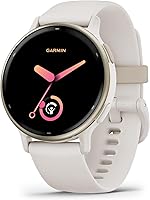
7 Best Garmin Watches (October 2026)
The best Garmin watches for running, fitness and outdoor use include the Garmin Forerunner 165 for guided running, the Garmin vivoactive 5 42mm for everyday fitness, and the Garmin Forerunner 265 46mm for race preparation.
On this page (10 sections)
- Which is the best Garmin watch for your routine?
- The best Garmin watches for running, fitness and outdoors
- How should you choose between Garmin watch families?
- How do you choose a comfortable Garmin watch size?
- How should you compare Garmin battery claims?
- Will your phone support the Garmin features you want?
- What should you set up during your first week?
- How should you use Garmin sleep and training summaries?
- What care habits and buying mistakes matter most?
- Which best Garmin watch pick should you buy?
The best Garmin watch for most runners is the Garmin Forerunner 165, while the vivoactive 5 is the better starting point for everyday fitness. Choose by the activity you want help with, then check fit, phone features and charging needs.
A runner building toward an event needs different tools from someone tracking walks, sleep and gym sessions. A watch that matches your routine is more useful than one packed with features you'll never open.
Our complete smartwatch guide covers the wider choices across brands. If your decision centers on phone features versus fitness guidance, compare Apple Watch and Garmin for daily use.
Our picks at a glance
-
1

-
2

-
3

Which is the best Garmin watch for your routine?
Start with the Forerunner 165 for running or the vivoactive 5 for mixed fitness. Move to another model when you can name a specific need, such as wrist calls, race preparation or regular outdoor trips.
WeekdayWise compared training guidance, activity choices, phone functions, outdoor tools and fit. A lower-ranked watch can still be the right buy when its main feature solves your particular problem.
Use the table to narrow your choice to 2 models. Then read their sections for the reason to buy each one and the reason to pass.
| Product | Best for | Battery life | Display | Activities | Our score |
|---|---|---|---|---|---|
| Garmin Forerunner 165 | guided running | Up to 11 days smartwatch mode; up to 19 hours GPS mode | AMOLED touchscreen with button controls | 25+ built-in activity profiles | 8.9 |
| Garmin vivoactive 5 42mm | everyday fitness | Up to 11 days smartwatch mode; up to 5 days with display always-on | AMOLED | More than 30 indoor and GPS sports apps | 8.7 |
| Garmin Forerunner 265 46mm | race preparation | Up to 13 days smartwatch mode; up to 20 hours GPS mode | AMOLED touchscreen with button controls | 30+ built-in activity profiles | 8.4 |
| Garmin Venu 3S | wrist calls | Up to 10 days in smartwatch mode | AMOLED | More than 30 built-in sports apps | 7.8 |
| Garmin Instinct 3 AMOLED 45mm | outdoor versatility | Up to 18 days in smartwatch mode | 1.2 in AMOLED | 7.8 | |
| Garmin vivoactive 6 42mm | varied workout routines | Up to 11 days in smartwatch mode | AMOLED | More than 80 indoor and GPS sports apps | 7.7 |
| Garmin Instinct 3 Solar 45mm | sun-filled outdoor days | Garmin claims unlimited smartwatch mode with solar charging, assuming all-day wear and 3 hours outside daily in 50,000 lux conditions | 0.9 in monochrome, sunlight-visible MIP | 7.6 |
The best Garmin watches for running, fitness and outdoors
The Forerunner 165 leads for guided running, but each watch below serves a different buyer. Pick the model that supports what you'll do each week rather than treating the order as a reason to buy features you don't need.
Garmin Forerunner 165: Best for guided running
- Built-in GPS
- Garmin Coach and adaptive training plans
- Up to 11 days in smartwatch mode
- AMOLED touchscreen and buttons
Choose the Forerunner 165 when running is your main goal and you want help planning sessions. It pairs pace and distance tracking with adaptive suggestions and recovery guidance.
Pros
- Built-in GPS for pace and distance
- Suggested workouts adapt to performance and recovery
- Touchscreen and traditional button controls
Cons
- Race-focused buyers may prefer the Forerunner 265's added training tools
- Phone-linked safety features require setup and mobile data coverage
Choose the Forerunner 165 if you want to turn regular runs into a more planned routine. Its adaptive daily suggestions respond to performance and recovery, giving you a useful starting point when you aren't sure what session to do next.
Built-in GPS records pace and distance, while Garmin Coach and race adaptive plans support specific running goals. Training effect explains the main benefit of a session, and recovery time helps you plan the gap before another hard effort.
The 43 mm watch combines an AMOLED touchscreen with traditional buttons. That gives you a choice of controls, so learn the buttons before your first run rather than figuring them out while moving.
Its activity profiles also cover cycling, strength and HIIT, which helps if those sessions support your running. Skip it if your main interests are sleep coaching, varied gym workouts or wrist calls.
Choose the 265 instead if you'll use its extra race and training tools. Our Forerunner 165 review takes a closer look at this running-focused option.
Garmin vivoactive 5 42mm: Best for everyday fitness
- More than 30 sports apps
- AMOLED display
- Up to 11 days in smartwatch mode
- Sleep coaching and nap detection
The vivoactive 5 suits a routine built around walking, gym sessions and occasional runs. Sleep coaching, nap detection and wheelchair mode extend its usefulness beyond workout recording.
Pros
- Covers common indoor and outdoor workouts
- Sleep coaching and automatic nap detection
- Music storage for listening with wireless headphones
Cons
- Always-on display reduces claimed battery life
- Choose the Venu 3S if paired-phone wrist calls are a priority
Choose the vivoactive 5 if your week includes walking, gym sessions, occasional runs and rest days. Its everyday fitness focus makes sense when staying active matters more than preparing for a particular race.
More than 30 sports apps cover familiar activities, including swimming and golf. Sleep coaching and nap detection put overnight records and daytime naps in the app, helping you review sleep timing alongside your workout schedule.
Wheelchair mode records pushes instead of steps and includes related activities and workouts. For a wheelchair user, that is a more useful buying detail than a large total number of sports apps.
Music storage lets you listen through wireless headphones without carrying your phone for playback. Set up your playlists before leaving rather than assuming music will be ready on the first outing.
Skip this model if the Venu's calling function or the vivoactive 6's animated workouts would be central to your use. Otherwise, start by checking whether it already covers every activity you actually do.
Garmin Forerunner 265 46mm: Best for race preparation
- Training readiness and race widget
- Multi-band GPS with SatIQ
- Up to 13 days in smartwatch mode
- 30+ activity profiles
Choose the Forerunner 265 for structured race preparation, training-load context and multisport sessions. Its training readiness tools and race widget reward runners who will act on the extra detail.
Pros
- Training readiness and training status
- Multi-band GPS with SatIQ
- Profiles include triathlons and open-water swimming
Cons
- 46 mm case needs careful fit consideration
- Extra training detail adds little if you only record casual runs
Choose the Forerunner 265 if you follow a training schedule and want more help judging workload. Its training readiness and training status tools add context for deciding when to push and when to ease back.
Readiness brings together sleep, recovery and training-load estimates in one view. Training status considers recent exercise and performance, so these tools serve different purposes rather than simply giving you another version of the same number.
You can enter a race and course in Garmin Connect to shape suggested workouts through the race widget. Profiles for triathlons and open-water swimming also make this a stronger choice for people whose training extends beyond running.
Multi-band GNSS with SatIQ is designed to improve positioning in challenging surroundings while managing battery use. That is a clearer upgrade reason than buying solely for its longer smartwatch-mode estimate.
Skip it if you mainly record relaxed runs and rarely review training trends. Also check the 46 mm case carefully, since a watch you find awkward at night is harder to wear consistently.
Garmin Venu 3S: Best for wrist calls

- Make and take calls when paired with a phone
- Up to 10 days in smartwatch mode
- Sleep coaching and nap detection
- More than 30 sports apps
The Venu 3S suits buyers who want fitness tracking and calls from a smaller watch. Its speaker and microphone work with a compatible paired phone, while animated workouts support exercise sessions.
Pros
- Make and take calls through a paired compatible phone
- 41 mm case is the smallest option here
- Animated workouts and wheelchair mode
Cons
- Wrist calls depend on a compatible paired phone
- Supported music services require a premium subscription for downloads
Choose the Venu 3S if taking calls from your wrist is a real part of your day. Its speaker and microphone let you make and take calls through a compatible paired phone, which is different from simply seeing an incoming-call alert.
The phone's voice assistant can also help with text responses, and Android users have direct text options on the watch. Check the functions for your phone before buying, since iPhone and Android interactions aren't identical.
Its 41 mm case is the smallest in this group. That makes it a sensible model to consider first if you prefer a less prominent watch, although case size alone doesn't settle comfort.
Animated workouts, wheelchair mode, sleep coaching and nap detection support daily fitness use. Downloaded music from Spotify, Amazon Music or Deezer requires a premium subscription, so include that in your service choices.
Skip the Venu if you rarely answer calls and mainly want running guidance. Its calling feature also won't meet a requirement to leave your phone behind and remain reachable.
Garmin Instinct 3 AMOLED 45mm: Best for outdoor versatility

- Metal-reinforced bezel
- Built-in LED flashlight
- Multi-band GPS with SatIQ
- Up to 18 days in smartwatch mode
Choose the Instinct 3 AMOLED for outdoor tools and a colorful screen without planning around solar exposure. A reinforced bezel, flashlight and compass give it a clear role beyond everyday workout tracking.
Pros
- LED flashlight with adjustable intensity and strobe modes
- Compass, barometric altimeter and multi-band GPS
- 10 ATM water rating
Cons
- 45 mm rugged case may not suit smaller wrists
- Choose the Solar version if solar charging is your main priority
Choose the Instinct 3 AMOLED if you want outdoor tools with a color screen and don't want solar exposure to drive your choice. Its reinforced bezel and rugged case give it a different focus from the fitness-first models.
The compass and barometric altimeter provide direction and elevation-related information, while multi-band GPS with SatIQ supports positioning. A built-in LED flashlight offers adjustable brightness and strobe modes for nearby illumination.
Garmin specifies a 10 ATM water rating and construction to MIL-STD-810 standards for thermal and shock resistance. Those details support its outdoor role, but they don't replace checking care guidance before a demanding activity.
The 1.2 in AMOLED display is the key reason to choose this version over the Solar model. Consider which information you want to read during an outing rather than choosing on battery claims alone.
Skip it if you mostly want guided gym sessions or phone calls. For outdoor trips, learn its tools close to home and carry backup lighting and navigation suited to the route.
Garmin vivoactive 6 42mm: Best for varied workout routines

- More than 80 sports apps
- Smart wake alarm
- Up to 11 days in smartwatch mode
- Animated workouts
The vivoactive 6 suits people who switch between exercise types and want more workout guidance. Suggested walking sessions and animated workouts give it a stronger purpose than activity count alone.
Pros
- Broad activity selection includes mobility
- Animated cardio, yoga, strength, HIIT and Pilates workouts
- Suggested walking workouts and smart wake alarm
Cons
- Extra sports apps add little if your routine stays the same
- Race-focused buyers should compare the Forerunner models
Choose the vivoactive 6 if you regularly change workouts and want guidance beyond recording a session. Its animated cardio, strength, yoga, HIIT and Pilates workouts give the broader activity selection a practical purpose.
More than 80 sports apps include mobility alongside familiar activities such as walking, cycling and swimming. Check for the specific activities you do, since the total count matters less than having useful choices for your week.
Suggested walking workouts are a strong reason to consider it if walking is your main exercise. You don't need a running goal to benefit from a watch that helps you plan regular movement.
Sleep coaching, nap detection and a smart wake alarm support its everyday sleep-tracking role. The alarm adds another reason to think about overnight comfort before choosing a watch by its screen alone.
Skip it if your routine is simple and the vivoactive 5 already covers it. Choose a Forerunner when race preparation, rather than workout variety, is the main problem you want the watch to solve.
Garmin Instinct 3 Solar 45mm: Best for sun-filled outdoor days

- Solar charging lens
- Monochrome sunlight-visible display
- Built-in LED flashlight
- Compass and barometric altimeter
The Instinct 3 Solar suits people who spend substantial time outdoors and prefer a sunlight-visible monochrome screen. Solar benefits depend on exposure, so choose it around your actual routine.
Pros
- Solar charging can extend time between charges
- 10 ATM water rating and reinforced bezel
- Built-in flashlight and outdoor navigation tools
Cons
- Unlimited smartwatch-mode claim requires specific daily light exposure
- Smaller monochrome display instead of a color AMOLED screen
Choose the Instinct 3 Solar if you spend substantial time outdoors and prefer a sunlight-visible monochrome display. Solar charging is useful only when your normal wear pattern gives the lens enough light.
Garmin's unlimited smartwatch-mode claim assumes all-day wear plus 3 hours outside daily in 50,000 lux conditions. It doesn't promise unlimited GPS recording, and time spent indoors or with the watch under a sleeve won't match that assumption.
The 0.9 in MIP screen is a different experience from the AMOLED options. Decide whether you prefer its outdoor-focused display before letting the charging feature settle the choice.
Like the AMOLED version, it brings a flashlight, compass, barometric altimeter and multi-band GPS with SatIQ. Its reinforced construction and 10 ATM water rating suit buyers who want outdoor equipment on the wrist.
Skip it if most days are spent at a desk or you strongly prefer colorful displays. Take a charging cable on longer trips until you understand how your own activity and light exposure affect runtime.
How should you choose between Garmin watch families?
Choose the family around your main weekly activity, then compare individual features. This keeps a small convenience from pulling you toward a watch that doesn't fit your larger goal.
Which Garmin watch is best for running plans?
The Forerunner 165 is the best starting point for guided running; choose the 265 when you'll use deeper training context. An event on the calendar alone doesn't mean you need every training metric.
Think about the decision you want help making: today's workout, recovery between hard sessions or preparation across several sports. Buy extra tools when they answer one of those questions.
Our Garmin watches for running guide focuses on that choice. The Forerunner 165 vs vivoactive 5 comparison helps if you're split between running plans and general fitness.
Should you choose a vivoactive or a Venu?
Choose a vivoactive for broad fitness use, or the Venu 3S when paired-phone calls matter. Within the vivoactive pair, workout variety and animated guidance are stronger reasons to choose the 6 than its model number.
Write down your 3 most common activities and any feature you would use daily. If the vivoactive 5 meets that list, a larger activity menu may add little.
For more detail on its daily role, read our Garmin vivoactive 5 review. Keep the comparison focused on what changes your routine rather than which watch has more menu entries.
Should you choose Instinct AMOLED or Solar?
Choose AMOLED for a color display, or Solar for its monochrome outdoor screen and charging support. Both provide the central outdoor tools described above, so display preference and actual daylight exposure should guide this decision.
Picture a normal workweek as well as a holiday outdoors. A charging feature that fits a few trips each year may matter less than the screen you'll read every day.
How do you choose a comfortable Garmin watch size?
Choose a watch you can wear through exercise, desk work and sleep without constant adjustment. Overnight comfort deserves attention if sleep and recovery insights are a main reason for buying.
Case diameter is only a starting point because wrist shape and strap position also affect fit. Compare the outline with a watch you already find comfortable, and check that the case doesn't extend awkwardly over your wrist.
Wear the strap snugly enough to limit sliding during exercise while keeping the fit comfortable. Follow Garmin's model-specific fit guidance, and check how the strap feels during workouts and desk work.
Don't choose a larger case just to get more features. Our guide to what to look for in a smartwatch helps you weigh comfort alongside the functions you'll use.
How should you compare Garmin battery claims?
Compare the operating mode you will use, then leave room for your charging habits. Smartwatch-mode days don't tell you how long a watch can record an uninterrupted GPS activity.
Garmin claims up to 11 days in smartwatch mode and 19 hours in GPS mode for the Forerunner 165. The corresponding claims for the 265 are 13 days and 20 hours, so the gap is much smaller during continuous GPS use.
Display settings matter too: the vivoactive 5's claim drops from up to 11 days to 5 with the display always on. Decide whether seeing the time without waking the screen is worth charging more often.
The Venu 3S has a claim of up to 10 days, while the Instinct 3 AMOLED reaches up to 18 days in smartwatch mode. These are upper estimates, so learn your own pattern before planning a trip around them.
Charge before a long outing instead of stretching the last remaining battery. Our guide to how long smartwatch batteries last explains why everyday runtime varies.
Will your phone support the Garmin features you want?
These watches support compatible iPhone and Android phones, but you should check each connected function separately. Notifications, wrist calls, music playback and emergency contact features have different requirements.
Receiving a message alert doesn't mean you can reply in every way, and GPS recording doesn't make a watch a standalone phone. The Venu's calling function still relies on a compatible paired handset.
For incident detection and Assistance on the supported models described here, complete setup and carry the paired phone with network coverage and data connectivity. Treat those tools as an added contact option rather than a substitute for an emergency plan.
Check that your bank and location support Garmin Pay if contactless payments are a buying reason. For music, confirm service requirements and finish downloads before you leave your phone behind.
Read whether a Garmin watch works with an iPhone for phone-specific context. Our guide to whether smartwatches need a phone explains the wider distinction between independent and connected functions.
What should you set up during your first week?
Start with pairing, fit and a few useful screens, then add features as you need them. A simple setup makes it easier to learn the watch and notice which information helps.
Pair and choose useful alerts
Use Garmin Connect to pair your watch and review available software updates. Enter profile details carefully, choose the correct units and review privacy settings before sharing activities.
Allow the notifications you genuinely need on your wrist. A short alert list makes important messages easier to spot and keeps the watch from interrupting every part of your day.
Build a clear workout screen
Put your most useful workout fields together instead of filling every screen with numbers. For a new runner, time, distance and pace are a practical starting point.
Before recording an outdoor activity, wait for the watch to confirm a GPS connection. Learn how to start, pause and save an activity close to home before relying on it during an event.
Establish a charging and sync routine
Check battery use across a normal week that includes workouts and overnight wear. Pick a regular charging window that doesn't remove the watch during the sleep periods you want to record.
Sync activities regularly and confirm that important sessions appear in the app. Set up any supported safety contacts and payment or music services before the day you expect to use them.
How should you use Garmin sleep and training summaries?
Use weekly summaries to review your routine, then compare them with your calendar and training goals. Sleep timing, recorded workouts and training-load estimates offer different views of how you spend your week.
A single score doesn't need to determine your next session or send you chasing a better number. Review sleep timing, workout frequency and session length together to see how closely your records match your plans.
Recovery-time estimates can help organize the gap between demanding workouts on your calendar. Keep those suggestions alongside your chosen training schedule and the time you actually have available.
Animated workouts make it easier to follow the order and timing of an exercise session. Choose a familiar workout, preview its steps and set up a screen you can read comfortably before starting.
What care habits and buying mistakes matter most?
Keep the watch clean, dry and comfortable, and avoid buying around features you won't use. Consistent wear and a clear purpose matter more than collecting extra metrics.
After sweaty workouts, follow Garmin's cleaning guidance for the case and band. Dry the watch and charging contacts before connecting the cable, and check that the strap is clean and comfortable before wearing it again.
Check the model's care instructions before swimming or exposure to heat, soaps or chemicals. A water-resistance figure doesn't mean every activity or cleaning method is suitable.
Don't treat an activity profile as proof that a watch includes every tool associated with that sport. For example, recording a run and receiving detailed race guidance solve different needs.
Avoid choosing solar charging from the word “unlimited” alone, or choosing a calling watch without understanding its phone dependency. Those mistakes are more likely to affect satisfaction than a small difference in claimed smartwatch runtime.
Finally, don't buy extra training detail out of obligation. If you want to record walks and build a steady exercise habit, choose for that goal with confidence.
Which best Garmin watch pick should you buy?
Choose your best Garmin watch by the decision it helps you make. Start with the Forerunner 165 for guided running, or the vivoactive 5 for a mixed fitness routine.
Buy the 265 if you'll act on its race and workload tools, the Venu 3S for paired-phone calls, or the vivoactive 6 for varied guided workouts. Choose an Instinct when outdoor tools matter, then settle AMOLED versus Solar by screen preference and real daylight exposure.
Before ordering, confirm fit, phone compatibility and your one must-have feature. If you're still weighing ecosystems, our Apple Watch vs Garmin guide is the next useful comparison; our everyday smartwatch picks cover broader choices.
Our top 3 picks at a glance
-
1
-
2
-
3
Frequently asked questions
Which Garmin watch is best for most people?
The Garmin vivoactive 5 is the broadest fit for everyday movement, sleep insights and mixed workouts. Choose the Forerunner 165 instead if running is your main reason for buying a watch.
Your weekly routine matters more than choosing the model with the longest feature list.
Which Garmin watch is best for running?
The Garmin Forerunner 165 is the best starting point for runners who want pace, distance and adaptive guidance. Choose the Forerunner 265 if training readiness, race planning and multisport profiles will shape your routine.
Our Garmin running watch guide helps you decide which tools you need.
Do Garmin watches work with iPhones?
Yes, these watches support compatible iPhones, but phone features differ by model. Receiving a notification does not mean a watch can handle a call, and the Venu 3S needs a paired compatible phone for wrist calls.
Read our guide to using Garmin with an iPhone before choosing.
Do Garmin watches need a monthly fee?
A monthly fee is not required for the free Garmin Coach adaptive plans described here. Separate services can cost extra: supported music downloads on the Venu 3S require a premium subscription.
Our guide to Garmin watch monthly fees explains what to check before enabling connected services.
How long does a Garmin watch battery last?
Battery life depends on the watch and operating mode, so compare smartwatch and GPS estimates separately. The Solar model's unlimited smartwatch-mode claim assumes all-day wear and 3 hours outdoors daily in 50,000 lux conditions.
Frequent GPS recording and display choices can change how often you need to charge.